Sweetcorn
Type: Vegetable
Rotation Group: 0, No rotation needed
 | | EARLIBIRDThe earliest maturing 'Supersweet' variety (having 2-3 times the sugar level of ordinary varieties), producing superb quality, deliciously sweet cobs. Improved tolerance to cold soil aids germination. |
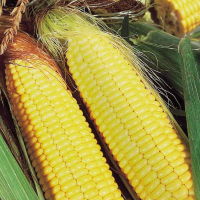 | | SUNDANCEStill considered the best sweet corn for early maturity in indifferent summers. The cobs are some 180mm (7in) long and close-packed with sugary kernels of creamy-yellow. Recommended for deep freezing. |
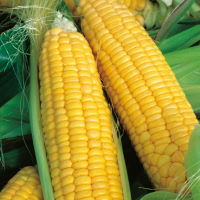 | | BOUNTIFULThis 'supersweet' strain is packed full of flavour. The large, well-filled cobs have tender, sweet kernels full of juice. Delicious! |
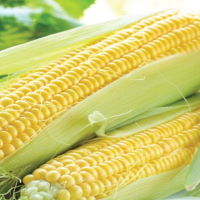 | | RISING SUNA 'Supersweet' variety bred to mature quickly for a shorter growing season. Shows good vigour in cold conditions and resistance to common diseases, for high quality, reliable crops of large and deliciously sweet kernels. Proven to be a reliable performer in the unpredictable British summers. |
Site, Soil and Preparation
A light, well drained fertile soil that is slightly acid with a pH of 5.6-7 is best. The site should be open, sunny and warm and sheletered from cold winds.
Indoor Sowing
To achieve better germination place seeds on moist kitchen paper in a plastic container with the lid on for 2-3 days. Sow seeds individually in biodegradable pots or modules filled with compost at a depth of 25mm (1in). Keep on a warm window sill above 20C.
Outdoor Sowing
It is best to pre-warm the soil by covering with cloches or black plastic sheeting before sowing outdoors. Sow 2 or 3 seeds at each position, 25mm (1in) deep and at spacings of 350-450mm 14-18in). As sweet corn are wind pollinated plant them in a block or square.
Thinning
Thin outdoor sown seeds to leave 1 plant at each position when they are 50mm (2in) tall. As sweet corn are wind pollinated plant them in a block or square.
Transplanting
When indoor grown seeds are 75mm (3in) tall harden them off gradually in a cold frame during the day. Plant them out at 350-450mm (14-18in) spacings.
Care
In exposed or windy sites stake and tie in the plants. Water young plants regularly until established and then only during long dry spells. Apply a nitrogen rich liquid feed when the cobs start to swell.
Harvest
The cobs should be ready to pick when the silks turn brown or black and wither. Test a kernel by pricking with your fingernail, if the liquid is clear it is unripe, if it is milky then it is ready.

