Butternut Squash
Type: Vegetable
Rotation Group: 0, No rotation needed
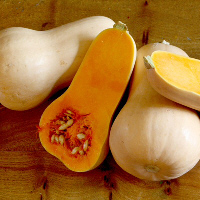 | | HUNTERProduces a good crop of good sized fruits that average approximately 800g in weight. Bred for the British climate for early maturing. Fruit have an excellent flavour. |
 | | HARRIEROne of the quickest maturing varieties producing good yields of fruit in just over 3 months. Fruit have a sweet flesh and average 1kg in weight. |
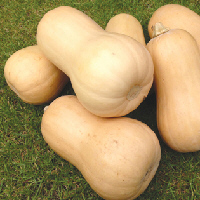 | | WALNUTBred for the British climate to give improved yields and earlier maturity. Fruits have good flavour and reach weights of between 1.5kg and 2kg. |
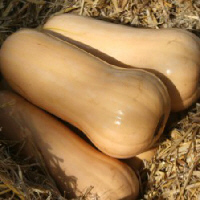 | | SWEETMAXThis British-bred variety produces top quality, well-shaped fruits suitable for exhibition work and ideal for the kitchen. It sets fruits early making the most of the sun we receive for sweet and tasty flesh. Each plant can produce up to three squashes, each up to 3kg. |
Site, Soil and Preparation
Squash require a well drained, humus rich soil in full sun, with shelter from winds.
Indoor Sowing
Sow squash seed indoors from April to May for transplanting later on. Sow pumpkins seeds on their sides in small 7.5cm (3”) pots of seed compost at a depth of about 2.5cm (1”). Place in a propagator or seal pots inside a plastic bag at a temperature of 20-25C (68-77F) until germination which takes 5-7 days. Do not exclude light, as this helps germination. Once germinated, grow pumpkins on in cooler conditions until all risk of frost has passed and pumpkin plants are large enough to be transplanted outdoors. Gradually acclimatise them to outdoor conditions over 7 - 10 days before planting pumpkins outdoors.
Outdoor Sowing
Alternatively direct sow squash outdoors from late May to June at a depth of 2.5cm (1”) and a distance of 2m (6 1/2’) - 3m (10’) apart depending on the variety. Sow 2 seeds per hole and thin out the weakest seedling per station after germination.
Thinning
Thin plants during transplantation to final growing position.
Transplanting
Transplant squash outdoors in warm, well drained, humus rich soil in full sun, with shelter from winds. Choose a spot that receives at least 6 hours of direct sun per day.
Care
Feed and water squash regularly. When growing squash, a thick mulch of organic matter spread around the plants will help to conserve moisture at the roots. Hoe between plants regularly to prevent weeds from establishing. Squash will begin to produce long stems which can be trained in a circle around the plant to prevent them spreading too far.
Harvest
Leave squash on the plant for as long as possible until the skin has hardened and the fruits start to crack near to the stem. Harvest pumpkins before the first frosts by cutting each fruit from the stem leaving several inches of the stem attached.

